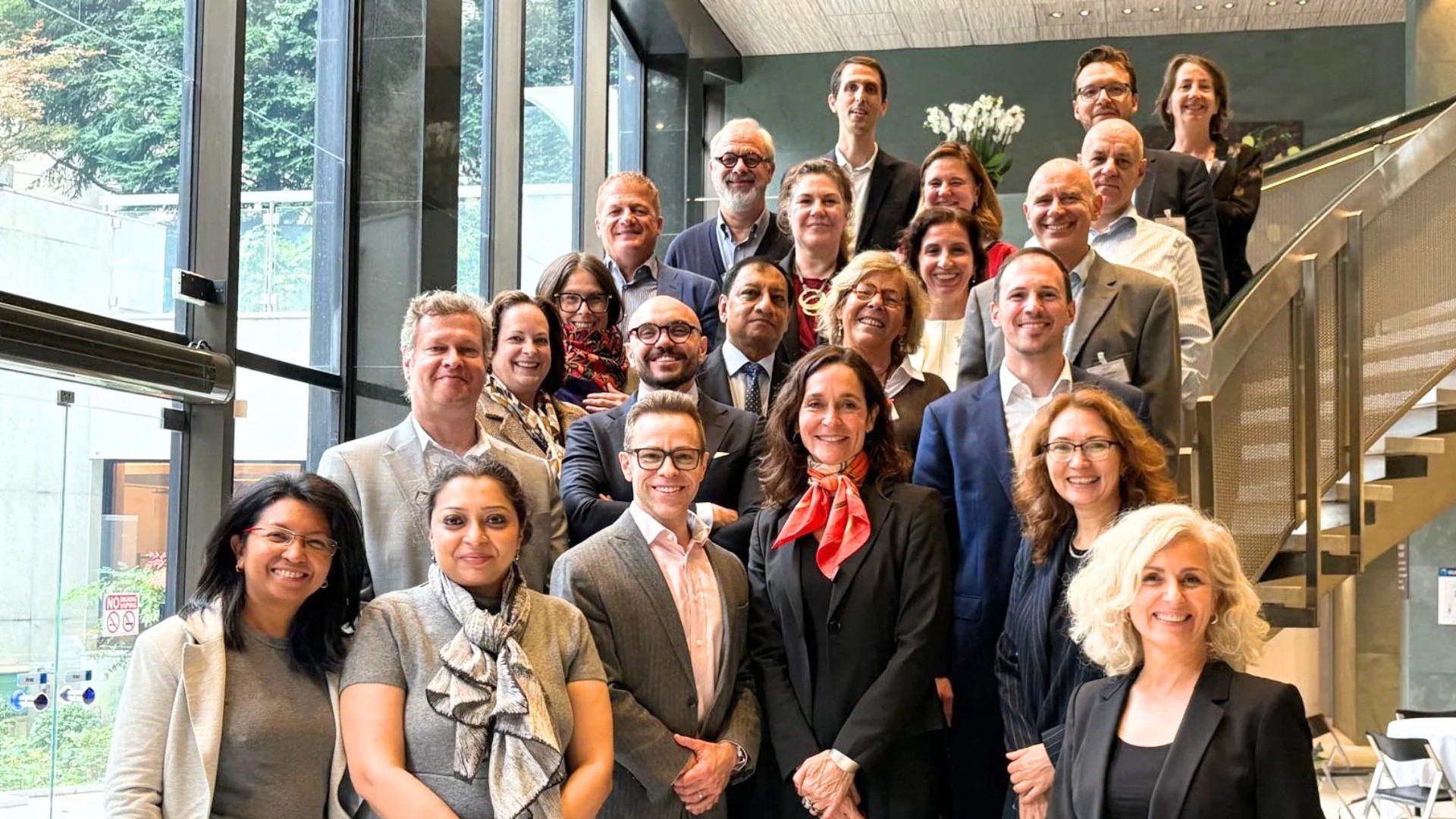
On October 27, 2026, the Global Evaluation Initiative (GEI) Partnership Council met in Paris, where its members reaffirmed their commitment to GEI. The Council took stock of progress under the GEI 2.0 strategy and discussed how the network can build on its achievements through stronger partnerships, deeper country engagement, and a sustainable financing model.
Sabine Bernabè, Vice President and Director-General, Evaluation, Independent Evaluation Group (IEG) of the World Bank Group, opened the meeting, which she co-chaired with Uwe Gehlen, Head of Evaluation at Germany’s Federal Ministry for Economic Cooperation and Development (BMZ). The Council brings together GEI’s funding partners, including the World Bank Group; bilateral donors from Germany, Canada, France, Switzerland, Finland, Portugal, and Norway; and multilateral and UN organizations such as the Inter-American Development Bank (IDB), the International Fund for Agricultural Development (IFAD), and UNICEF.
“Geopolitical shifts are reshaping priorities, and budgets are under more pressure than at any point in the last decade,” said Bernabè. “Yet every institution around the table remained committed to the GEI partnership, and that says a great deal.”
In this climate, she added, the values that evaluation stands for—evidence-based decisions, transparency, and accountability for public financing—can no longer be taken for granted.
The Partnership Council Progress Report shows the scale of GEI’s work. Since 2021, GEI has supported the strengthening of monitoring and evaluation (M&E) systems in 34 countries. Over the same period, it has built the capacity of more than 23,000 people through 251 training sessions. It has also delivered 79 technical assistance programs, 41 capacity development strategies, and 15 Monitoring and Evaluation Systems Analyses (MESA), and produced 466 knowledge products. Across its digital platforms, the network has engaged more than 4 million users.
The past year also marked an important transition. GEI moved further from predominantly activity-based capacity development toward longer-term support for national and institutional M&E systems. At the same time, the network continued to connect country-level technical support with regional expertise, global knowledge, professional development, partnerships, and peer learning.
GEI’s global knowledge-sharing platforms are central to this. Glocal Evaluation Week 2026, held June 1–5, attracted around 19,500 registered participants across 325 sessions run by 238 organizers. In the year to June 2026, BetterEvaluation reached 394,582 users and generated 819,246 page views.
These results provided the backdrop for a broader Council discussion about GEI’s value as a network. Members affirmed the GEI 2.0 strategy’s emphasis on bringing together the capabilities, relationships, and reach of its implementing partners—the Centers for Learning on Evaluation and Results (CLEAR centers), the International Program for Development Evaluation Training (IPDET), and L’École nationale d’administration publique (ENAP)—with those of development partners and other institutions.
Strong Support for GEI’s Next Phase
Council members also stressed the importance of maintaining the long-term institutional capacity behind these results.
“GEI has demonstrated that it is a strong and valuable platform for strengthening evaluation systems. Germany remains committed to supporting this work and to working with GEI and its partners to sustain the progress achieved and strengthen the network for the future,” said Gehlen. Germany is the Council’s current co-chair and, in that role, helps represent the perspective of GEI’s bilateral donors.
Bernabè said she was impressed by what GEI had achieved under GEI 2.0 over the past year, despite an extremely constrained environment, from convening and knowledge brokering to training, country-level engagement, and strategic partnerships.
“Now we have to work on the additional financing to match this potential,” she said. “Strengthening a national M&E system takes time and depends on relationships that are hard to rebuild once lost. If we stay the course together, we can ensure that when better times come, we build on a solid base.”